
Explore our premier white-label aroma candles engineered for luxury retailers, hospitality chains, and global private brands. Fully customizable in wax formula, scent load, vessel architecture, and gift packaging.
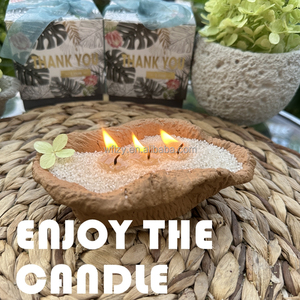
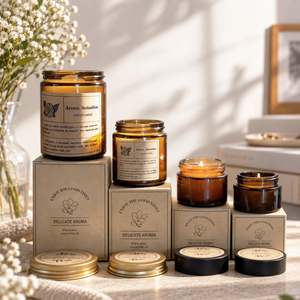
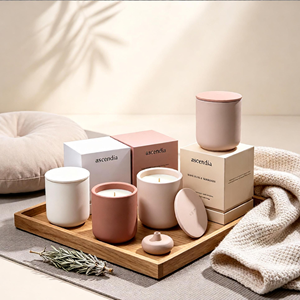
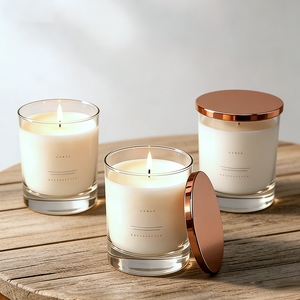
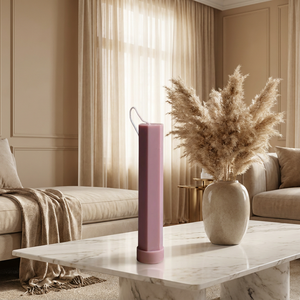
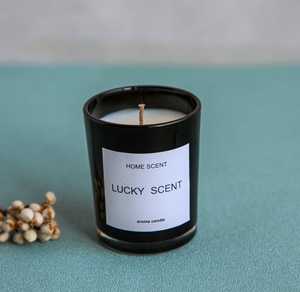
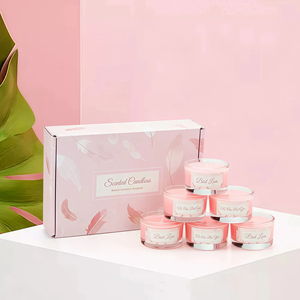
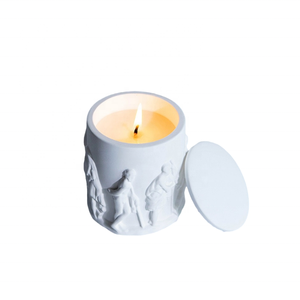
As the global home fragrance and wellness industry accelerates toward premiumization, environmental responsibility, and functional wellness, international buyers—ranging from boutique lifestyle labels to multi-national retail chains—require manufacturing partners that offer far more than simple assembly line output. China has evolved from a volume-centric OEM assembly hub into the epicenter of high-precision candle engineering, advanced botanical wax chemistry, and vertical supply-chain integration.
As a leading China custom candles supplier and exporter, our enterprise bridges the gap between artisanal design concepts and industrial-scale manufacturing rigor. By standardizing clean-burning botanical formulations (such as 100% hydrogenated soy wax, coconut wax matrices, and microcrystalline-free sand wax), adhering strictly to international safety standards (EN 15493 for burning safety, EN 15494 for product safety labeling, and REACH/IFRA compliance for fragrance compounds), we provide international buyers with a secure, highly transparent procurement pathway.
Information Gain Insight for B2B Buyers: Modern candle procurement is no longer evaluated solely on cost-per-unit. Key performance metrics now center on Fragrance Throw Efficiency (FTE), Wick-to-Vessel Thermal Balance, zero-soot clean combustion, and carbon-neutral transit logistics.
Our manufacturing infrastructure is designed around end-to-end quality assurance. Unlike fragmented operations that outsource critical steps, our production facilities consolidate raw material testing, wax blend formulation, automated flame-temperature pouring, wick stabilization, custom vessel decorating, and certified laboratory burn analysis under one certified quality management framework (ISO 9001, BSCI, SMETA).
Procurement teams must anticipate shifts in consumer values, regulatory frameworks, and sustainability metrics. Below are the key structural trends driving the next decade of private label candle manufacturing:
Global consumer demand has permanently pivoted away from petroleum-derived paraffin wax due to concerns over benzene emissions and soot buildup. B2B orders are overwhelmingly specifying hydrogenated soy, coconut, rice bran, and beeswax blends. China's advanced hydrogenation refineries now lead the world in producing low-melting-point, high-fragrance-retention plant waxes.
Importers are facing heightened enforcement regarding chemical transparency. European REACH standards, CLP regulation compliance, SDS (Safety Data Sheets), and US California Proposition 65 requirements demand full traceability of every fragrance ingredient. Contract manufacturers must provide complete chemical documentation prior to shipment.
Sustainability mandates are transforming container designs. High-end buyers are moving toward multi-use ceramic vessels, heavy-gauge architectural glass, and refillable wax inserts or sand wax refills. This drastically reduces transit packaging weight and aligns with modern ESG (Environmental, Social, and Governance) targets.
Developing a commercial-grade scented candle requires balancing thermal dynamics, fragrance volatility, and capillary action. The engineering behind our OEM custom manufacturing focuses on three key technical pillars:
A common failure in lower-grade OEM manufacturing is an imbalanced "fragrance throw." Cold throw refers to the scent intensity when the candle is unlit at room temperature, while hot throw measures fragrance dispersion during combustion. Achieving a 8% to 12% scent load without causing wax sweating, surface pitting, or wick drowning requires precise emulsion control during the pouring phase. Our factory utilizes multi-stage temperature-controlled tunnel cooling, ensuring ideal crystalline lattice formation within the soy matrix.
The wick serves as the engine of the candle. A wick that is too small results in "tunneling" (unburned wax clinging to vessel walls); a wick that is too large produces excessive flame height, smoke, and overheating glass. We match vessel inner diameters (IDs) with specific wick materials:
Visual appeal drives consumer purchasing decisions. Our factory offers advanced surface treatment options for glass, ceramic, and metal containers:
In alignment with Search Quality Rater Guidelines, establishing true Experience, Expertise, Authoritativeness, and Trustworthiness (E-E-A-T) is paramount. Our enterprise operates with complete operational transparency, robust quality control systems, and specialized client services built over decades of international trade.
Our manufacturing sites maintain annual BSCI, SMETA, and ISO 9001 certifications. Every product batch is delivered with complete SDS documentation, IFRA conformity certificates, and heavy-metal-free wick laboratory test reports.
Candles are sensitive to temperature fluctuations during transit through equatorial ocean zones. We utilize thermal-insulated container linings and specialized moisture-absorbent packaging to prevent wax softening or frosting in transit.
We provide dedicated R&D sample turnarounds within 7 to 10 working days, including custom fragrance blending, 3D container rendering, and rapid box sample printing for sales presentation approval.
Everything procurement managers, brand directors, and importers need to know about custom candle manufacturing in China.
Our standard MOQ starts at 1,000 units per fragrance/vessel combination for standard glass jars. For custom-molded ceramic vessels, unique glass colors, or specialized rigid gift boxes, MOQs typically range from 2,000 to 3,000 units depending on raw material production runs.
Frosting and sinkholes are natural characteristics of pure botanical soy wax. We eliminate these defects by formulating proprietary soy-coconut hybrid blends, precisely controlling fragrance oil emulsion temperatures, and utilizing multi-stage automated tunnel cooling with strict humidity controls.
We support both pathways. Clients can select from our library of 400+ pre-tested, IFRA-compliant fragrances, or supply their own scent concentrate. Alternatively, our master perfumers can match sample scents provided by clients through GC-MS (Gas Chromatography-Mass Spectrometry) analysis.
For North America, products require ASTM F2179 (Glass Container Safety) and ASTM F2417 (Candle Fire Safety) compliance, alongside OSHA Safety Data Sheets (SDS). For Europe, compliance with EN 15493 (Flame Safety), EN 15494 (Product Safety Labels), EN 15495 (Smoke Behavior), and REACH/CLP registration is required.
Initial scent and vessel sample development typically requires 7 to 10 business days. Once pre-production samples are approved and artwork is finalized, mass production lead times generally range between 25 and 35 days, depending on order volume and packaging complexity.
During warm transit seasons, we utilize thermal barrier foil container liners and moisture-absorbing desiccant packs. For highly heat-sensitive low-melt coconut formulas, reefer (refrigerated) ocean containers can be arranged directly from our loading docks to destination ports.
We offer comprehensive packaging solutions including rigid gift boxes, tuck-end folding cartons, eco-friendly kraft packaging, and cylinder tubes. Printing techniques include CMYK offset printing, tactile embossing/debossing, metallic foil stamping, spot UV, and soy-based eco inks.
Yes, we offer FSC-certified natural wooden wicks. Wooden wicks create a distinct crackling sound and a wider, horizontal flame pool ideal for high-viscosity waxes, whereas cotton wicks deliver a consistent vertical flame with zero sound. Both options are lead-free and non-toxic.