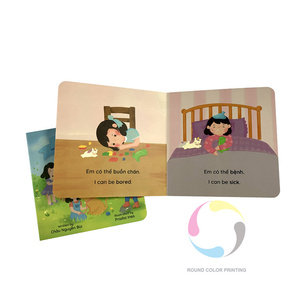
Heavy-Duty Board Book
Custom Children Kids Baby Board Books Printing on Demand
Ultra-thick 350gsm CCNB mounted greyboard with child-safe rounded corner die-cutting and non-toxic gloss lamination.

High-margin, safety-certified interactive formats manufactured with precision greyboard binding, wipe-clean lamination, and non-toxic aqueous chemistry.
Ultra-thick 350gsm CCNB mounted greyboard with child-safe rounded corner die-cutting and non-toxic gloss lamination.
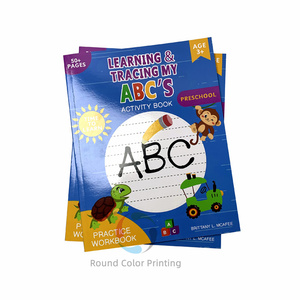
Rotary web offset printed workbooks utilizing 120gsm FSC-certified woodfree paper for smooth pencil and crayon application.
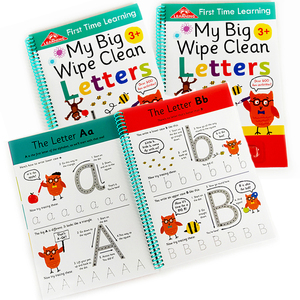
Double-sided thermal PET laminated sheets compatible with dry-erase markers. Guaranteed zero ghosting after 1,000+ erasures.
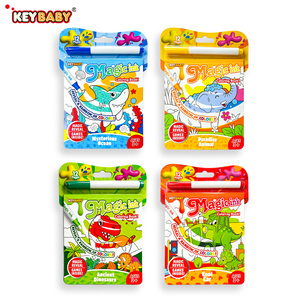
Hydro-chromic and reveal-ink technology where color appears only on specially treated paper surfaces. Includes OEM pen integration.
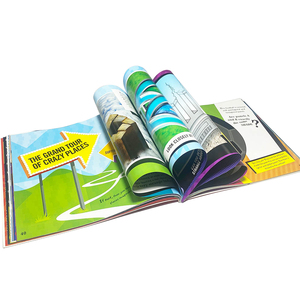
Precision lenticular and barrier-grid printing producing dynamic motion and 3D visual illusions upon manual page interaction.
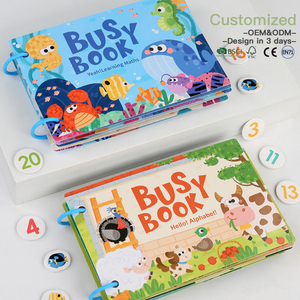
Multi-sensory quiet book featuring heavy-duty hook-and-loop fasteners, pre-cut board cutouts, and reinforced binding for toddlers.
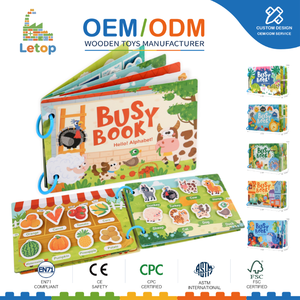
Curriculum-aligned early cognition book set featuring tactile matching elements, color sorting grids, and durable spiral wire binding.
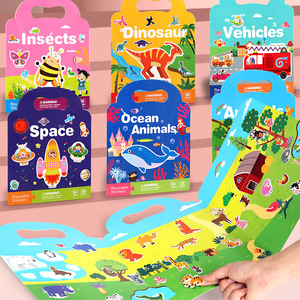
Adhesive-free static cling stickers on synthetic gloss playing boards. Washable, infinitely repositionable, and ideal for travel kits.
Navigating factory capacities, ink safety regulations, and production engineering parameters in the post-2025 educational publishing market.
The global market for children’s interactive publishing, activity workbooks, and early learning quiet books has undergone a seismic shift. B2B purchasers, brand owners, and educational publishing houses no longer evaluate an activity book factory solely on unit cost. Modern procurement strategy demands rigorous audit oversight across chemical compliance, automated binding precision, micro-batch agility, and anti-ingestion safety engineering.
Whether sourcing ultra-durable board books with anti-delamination edging, wipe-clean dry-erase practice manuals, or complex sensory busy books featuring multi-material die-cuts, choosing the right production facility dictates your product’s retail performance and regulatory approval in key markets such as North America, the European Union, and Australia.
High-volume interactive publishing requires advanced machinery, stringent raw material traceability, and multi-tier quality control.
Superior factories utilize high-density greyboard (up to 1200gsm) combined with food-grade adhesives to prevent page warping under varying humidity levels, essential for long shelf life.
Mandatory use of soy-based vegetable printing inks, heavy-metal-free aqueous coatings, and phthalate-free plastic accessories to guarantee full compliance with CPSIA, ASTM F963, and EN71.
High-speed Japanese and European CNC die-cutters delivering smooth, burr-free edges, child-safe radius corners, and exact tolerances on intricate lift-the-flap elements.
In-house capacity to synthesize mixed media: combining paperboard, dry-erase PET film, magic water pens, velcro fasteners, sound modules, and reusable static vinyl.
Direct chain-of-custody partnerships with sustainable paper mills ensuring 100% recyclable, ethically sourced raw materials that satisfy ESG procurement mandates.
High-resolution camera sensors operating along the binding line to detect misalignments, color variations (ΔE < 1.0), ink smudges, or missing components instantly.
Direct comparison of industrial printing specifications across primary children's activity book production lines.
| Format Specialty | Primary Substrate | Lamination & Coating | Standard Lead Time | Safety Testing Standards |
|---|---|---|---|---|
| Custom Board Books | 350gsm CCNB + 800gsm Greyboard | Child-Safe Gloss / Matte Aqueous | 18 - 25 Days | ASTM F963-17, EN71 Part 1-3 |
| Wipe-Clean Workbooks | 300gsm Art Card / 140gsm Offset | Double-Sided Thermal Dry-Erase PET | 15 - 20 Days | CPSIA Total Lead, REACH SVHC |
| Magic Ink / Water Reveal | 250gsm Hydro-Sensitive Art Board | Aqueous Reveal Coating Layer | 20 - 28 Days | TRA (Toxicological Risk Assessment) |
| Montessori Felt Busy Books | Non-Woven Soft Felt / Cardstock | Reinforced Stitching / Ultrasonic Cut | 25 - 35 Days | AZO Dye-Free, ISO 8124 |
| Static Sticker Books | 180gsm Synthetic Gloss Paper | High-Gloss UV Protective Layer | 14 - 18 Days | Phthalate 8P Free, EN71-9 |
An analytical breakdown of the leading OEM manufacturing setups powering modern interactive children's book brands globally.
Facilities under this category focus exclusively on rigid, heavy-duty children's board books designed for infants and toddlers (Ages 0-3). Built around automated Kolbus and Heidelberg casing-in lines, these plants mount multi-ply greyboard sheets with precision cold-glue systems. Their primary engineering advantage lies in producing 100% flat-opening spread bindings that withstand aggressive tearing, biting, and moisture exposure without layer separation.
Wipe-clean learning activity book production requires specialized thermal film lamination equipment capable of applying non-porous PET coatings seamlessly across high-volume offset sheets. These factories maintain strict climate-controlled clean rooms to eliminate dust inclusions under the film. Their proprietary surface coatings accept marker inks without bead-up and allow complete dry-wipe erasing even weeks after application.
Magic ink and water-reveal coloring book manufacturers deploy screen printing and specialized flexographic units to apply chemical reveal layers over hidden four-color artwork. Modern top-tier factories utilize non-toxic, water-activated opaque inks that turn completely transparent when wet and revert to opaque white upon drying. Integrated tooling allows co-packaging of refillable water pens directly into blister trays glued to the cover.
Combining textile manufacturing with traditional bookbinding, felt busy book factories employ laser cutting machines to construct intricate fabric gears, lace tie-ups, zippers, and velcro-matched puzzle elements. Quality control in these plants is heavily centered on seam tensile strength testing (pull force >90N) to ensure small fabric components do not detach and present choking hazards for toddlers.
Optical illusion and multi-layer pop-up factories utilize advanced structural design software paired with automated die-cut assembly jigs. Printing techniques include lenticular plastic lens mounting, moiré pattern line grids, and precision fold-gluing. These factories excel at transforming 2D printed sheets into dynamic 3D interactive learning experiences through advanced paper engineering.
Facilities specializing in static cling activity books operate custom rotary die-cutting lines that kiss-cut soft plasticized PVC or eco-friendly Static PET films without puncturing the release liner. Combined with high-gloss synthetic laminated background pages, these sticker books allow endless peel-and-stick usability without leaving sticky adhesive residues behind.
Designed for heavy educational use, these factories feature high-speed automated punch-and-bind machinery for twin-loop wire-O and spiral spiral binding. Utilizing sturdy 150gsm uncoated woodfree internal pages that eliminate ink bleed-through, these plants specialize in kindergarten curriculum books, letter tracing guides, and math practice pads.
For high-volume retail chains and mass distributors, softcover saddle-stitched activity books offer the ultimate balance of unit cost efficiency and lightweight shipping. Equipped with multi-station web offset presses and automated stitcher-trimmers, these manufacturers output up to 50,000 workbooks per shift with built-in perforated coupon or reward sticker inserts.
Meeting European and Nordic eco-label mandates, green-certified print factories operate exclusively with post-consumer recycled paper, soy-and-vegetable-based inks, and water-soluble adhesives. Their energy footprint is offset via solar installations, and all paper waste is captured and re-pulped within closed-loop recycling networks.
Integrating concept design, artwork typesetting, material engineering, manufacturing, and global direct-to-warehouse shipping. Turnkey facilities provide buyers with in-house structural packaging designers, regulatory compliance engineers, and dedicated account management for custom retail display box creation (CDUs and FSDUs).
Anticipating technological advancements, material evolution, and regulatory shifts in the global publishing supply chain.
Global chemical restrictions are accelerating the migration from traditional PVC static stickers and accessories toward food-grade silicone and bio-based TPU films. Leading factories are re-tooling laminators to handle high-performance eco-polymers seamlessly.
High-speed B2 digital inkjet presses are enabling short-run customization, allowing publishers to create regionalized, multilingual, or personalized activity book runs without incurring astronomical offset plate setup fees.
Integration of artificial intelligence camera systems along collating lines ensures 100% verification of page sequencing, accessory placement, and glued components, reducing wholesale return rates to virtually zero.
Direct answers to core operational, chemical compliance, and production timeline queries from professional buyers.
For the US market, full compliance with CPSIA (Consumer Product Safety Improvement Act) and ASTM F963-17 is mandatory, covering total lead content, heavy metal limits in inks, and small parts physical safety. For the EU, products must pass EN71 Parts 1 (Mechanical), 2 (Flammability), and 3 (Migration of chemical elements), alongside REACH SVHC screening. Leading OEM factories provide third-party testing reports from accredited labs such as SGS, TÜV, or Intertek.
Standard MOQs for offset-printed paperbacks range from 2,000 to 3,000 units due to press setup paper waste. However, for specialized multi-material items such as felt quiet books or magic ink kits, MOQs are often tiered between 500 and 1,000 units. Sourcing through integrated publishers with established production channels allows lower MOQs by grouping raw material orders.
Factory quality control labs perform accelerated aging tests by applying dry-erase marker ink onto laminated sheets and placing them in thermal environmental chambers at 45°C and 80% relative humidity for 72 hours. The ink is then wiped using standard felt erasers to verify that zero pigment ghosting or chemical degradation of the film occurs.
Pre-production hard-copy proofing typically requires 5-7 business days. Once mass production digital files and physical proofs are signed off, manufacturing takes between 18 to 28 calendar days depending on binding complexity and custom accessory packaging. Air freight delivery averages 7-10 days, while ocean freight to US/EU ports requires 25-35 days.







Combining US design discipline with optimized factory-direct manufacturing lines to serve over 4,000 retailers worldwide.
Founded with a focus on editorial integrity, high-spec paper craft, and strict safety engineering, our organization has grown into a premiere manufacturing partner for international book publishers, museum stores, and specialty retail brands. Every project is overseen by dedicated print production managers who ensure raw materials pass rigorous chemical inspections prior to press runs.
We stand behind every production run with complete quality assurance. All shipments undergo rigorous final sampling (AQL 1.5/4.0 Standard) to ensure compliance with artwork specifications, color density targets, and binding strength thresholds.
Unlock volume pricing, custom binding options, and physical sample boxes for your upcoming publishing catalog or retail brand line.
Get Catalog