
Direct-from-factory OEM/ODM manufacturing. Customized for global distributors, commercial hospitality, and retail private labels.
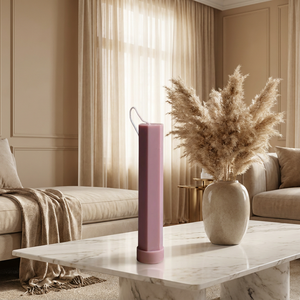
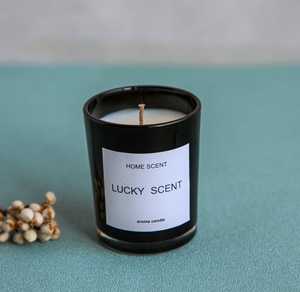
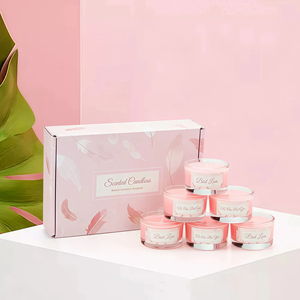
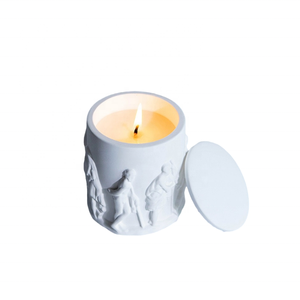
The global commercial and retail kitchen towel sector is experiencing a structural migration toward functional material science, sustainable fiber provenance, and automated precision weaving. Valued at over $3.8 billion globally with a projected CAGR of 5.6% through 2030, procurement strategy in North America, Europe, and Australia is increasingly defined by total lifecycle durability, quick-dry performance metrics, and strict environmental compliance.
As leading **China Kitchen Towels Manufacturers**, our state-of-the-art facilities bridge the gap between traditional craftsmanship and automated textile engineering. Importers, brand owners, and global distributors require actionable technical metrics to navigate fiber sourcing—moving beyond basic unit cost into comprehensive evaluation of tensile recovery, linting coefficients, and colorfastness ratings under industrial wash cycles.
Opting for advanced ring-spun long-staple cotton or split-microfiber constructions reduces lifetime replacement costs in commercial catering environments by up to 34% while reducing micro-plastic shedding in eco-conscious consumer retail lines.
Selecting the optimal material specification depends on targeted end-use environments, ranging from high-turnover food service operations to premium retail home goods collections. Below is our engineering benchmark grid summarizing performance characteristics across our primary textile matrix:
| Material Construction | Typical GSM Range | Absorbency Speed | Linting Index | Tensile Durability | Target Application |
|---|---|---|---|---|---|
| Microfiber Waffle Weave (80/20 Poly) | 300 - 450 GSM | < 1.2 Seconds | Ultra-Low (<0.01%) | High (500+ Wash Cycles) | General Cleaning, Glassware, Janitorial |
| Ring-Spun Organic Cotton | 280 - 400 GSM | < 2.5 Seconds | Low (<0.05%) | Medium-High (300+ Cycles) | Retail Kitchen Kits, Bakery, Daily Prep |
| Bamboo Cellulosic Fiber Blend | 320 - 420 GSM | < 1.5 Seconds | Very Low (<0.03%) | Medium (250+ Cycles) | Luxury Home Goods, Eco-Friendly Retail |
| Flax Linen / Cotton Hybrid | 220 - 350 GSM | < 3.0 Seconds | Zero Lint | Exceptional (600+ Cycles) | Polishing Fine Crystal, High-End Culinary |
| Heavy Terry Bar Mop Cotton | 400 - 550 GSM | < 1.0 Seconds | Moderate (<0.12%) | Heavy Commercial (400+ Cycles) | Restaurants, Bars, Commercial Kitchens |
As global retail standards evolve and commercial users prioritize labor efficiency, four key trends dominate the kitchen textile manufacturing sector:
Global buyer demand has pivoted sharply toward Global Recycled Standard (GRS) certified post-consumer polyester and GOTS-certified organic virgin cotton. Utilizing closed-loop water recycled dyeing lines, modern manufacturers are cutting environmental footprints by over 40% per unit produced.
Integration of non-leaching silver-ion and zinc-based antimicrobial treatments into towel fibers inhibits bacterial growth (such as E. coli and Staphylococcus aureus) by 99.9%. This extends freshness in wet kitchen environments and reduces foul odor generation.
High-end hospitality sectors require specialized flat-weave and ultra-dense continuous filament microfiber towels. These eliminate water spots and micro-lint fragments on crystal glassware and stainless steel surfaces without requiring chemical spray agents.
The structural integrity of a commercial kitchen towel depends entirely on yarn selection, loom tension control, and finishing treatments. As an established OEM manufacturer, our production process follows rigid engineering protocols:
Utilizing high-speed Toyota and Tsudakoma air-jet looms, we maintain uniform pick density across every square inch of fabric. This eliminates warp-and-weft shifting, ensuring that kitchen towels retain their rectangular geometry even after hundreds of commercial high-temperature laundering cycles.
All customized colorways utilize low-temperature reactive dyes free of AZO compounds and heavy metals. With a colorfastness rating to washing of Grade 4.5+ (ISO 105-C06) and colorfastness to rubbing of Grade 4.0+ (ISO 105-X12), our kitchen towels withstand bleach dilutions and commercial laundering chemicals without color bleeding.
A frequent failure point in commercial kitchen textiles is edge unraveling. Our automated hem sewing units feature twin-needle lockstitching and heavy-duty 4-thread overlock edging (12 to 14 stitches per inch), drastically enhancing edge shear resistance and structural longevity.
Vertically integrated textile production designed for global agility, strict QA audit compliance, and market-competitive volume pricing.
From custom pantone color dyeing and Jacquard logo weaving to bespoke retail hangtags and eco-friendly FSC-certified packaging sets, we support full private-label creation from concept to shipment.
Our dedicated quality control engineering team conducts raw yarn tensile testing, inline weaving inspection, and pre-shipment laboratory audits ensuring zero sub-standard batch dispatches.
Located near major ocean port hubs (Ningbo/Shanghai), we offer flexible Incoterms including FOB, CIF, DDP, and DDU with expedited sample turnarounds within 3–5 business days.
Our standard Minimum Order Quantity (MOQ) is 1,000 pieces per color/design for standard catalog items. For fully customized dyed yarn, special jacquard weaves, or custom pantone colors, our baseline MOQ is typically 3,000 pieces per specification. We also offer low-volume sample runs for market validation.
Our manufacturing facilities comply strictly with global ethical and environmental standards. We hold OEKO-TEX Standard 100 Class I (safe for infant contact), Global Organic Textile Standard (GOTS), Global Recycled Standard (GRS), BSCI social audits, and ISO 9001:2015 quality management certifications.
We test liquid absorbency in accordance with ISO 9073-6 test standards. A drop of distilled water is placed onto the fabric surface under controlled room temperature and humidity (21°C, 65% RH), measuring the exact duration in seconds required for complete absorption. Our premium commercial lines absorb liquid in under 1.5 seconds.
Custom pre-production lab dips and physical samples require 5 to 7 business days. Once the sample is approved and the deposit is confirmed, mass manufacturing lead times generally range between 20 to 30 days, depending on order volume and packaging complexity.
Yes, we offer comprehensive turn-key retail packaging solutions. Options include printed paper belly bands, FSC-certified cardboard header cards with plastic or fabric hangers, roll packaging with shrink wrap, woven brand labels, barcode stickers, and retail-ready floor corrugated display boxes (PDQ).
All fabrics undergo pre-shrinking and heat-setting treatments prior to sewing. We guarantee a post-wash shrinkage rate of under 3% for microfiber and under 5% for pure cotton woven lines (following ISO 6330 washing protocols). Dyeing processes incorporate reactive dye fixation for superior washing and light fastness.