Disposable Paper Coasters are small, practical tools used in cafés, restaurants, offices, hotels, and homes. They sit beneath cold drinks, coffee cups, and occasional cocktails. Their main purpose is simple: they catch condensation and small spills before moisture reaches a table. A coaster can protect polished wood from rings, reduce cleaning time, and make a serving area look more organized.
In busy cafés, staff often place paper coasters under iced tea or bottled water. The coaster absorbs droplets while customers move their drinks around. Printed designs can also display a logo, seasonal message, menu detail, or event theme. This makes Disposable Paper Coasters useful for quiet, low-cost brand communication. At weddings and business gatherings, custom coasters can match the table setting without adding much weight or storage space.
However, paper coasters are not perfect. They can become soft after heavy soaking. They may fail under very hot, wide, or unstable containers. Their environmental value also depends on the paper source, ink, coatings, and local recycling facilities. A responsible buyer should check product specifications instead of trusting vague green claims. Thickness matters. Surface texture matters too. From practical use, a coaster that stays flat and absorbs quickly usually performs better than one chosen only for appearance. Small details matter. Even so, Disposable Paper Coasters remain a convenient choice for short-term beverage service, especially when cleanliness, presentation, and quick replacement are important.
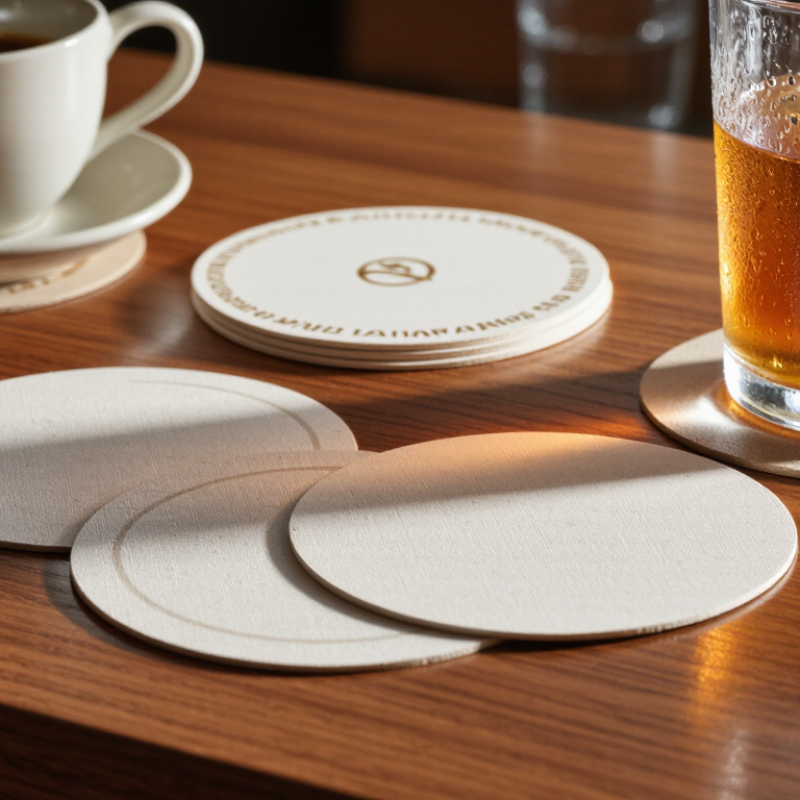
What Are Disposable Paper Coasters Used For?
Disposable paper coasters are small, single-use pads placed under cups, glasses, and takeaway containers. Their main purpose is practical: they absorb moisture, reduce table stains, and create a cleaner serving surface. Most are made from paperboard, often with a smooth printed top and a more absorbent inner layer. Common shapes include circles, squares, and custom-cut forms.
Thickness and absorbency vary by application. A thin coaster suits quick service, while a denser paperboard version feels firmer under a cold drink. Some include water-resistant coatings, but this can affect recycling options. They are lightweight, stackable, and easy to replace after each customer. Very convenient.
According to Grand View Research, the global disposable tableware market was valued at about 35.1 billion US dollars in 2022. Coasters represent only a small part of this wider category, yet their use follows the same demand for hygienic, convenient foodservice products. In practical settings, they also support surface protection and visual presentation. However, paper coasters are not perfect. A saturated coaster may curl, tear, or leave moisture behind. Performance depends on paper density, drink temperature, and exposure time. The product seems simple, but material choices deserve closer attention.
| Data Dimension | Typical Information | Practical Description |
|---|---|---|
| Definition | Single-use beverage accessory | A disposable paper coaster is a small, absorbent or moisture-resistant pad placed under a cup, glass, bottle, or other drink container. |
| Primary Purpose | Surface protection | It helps protect tables and counters from water rings, condensation, minor spills, stains, and heat transferred from beverages. |
| Common Usage Locations | Food-service and hospitality settings | Typical locations include cafés, restaurants, bars, hotels, offices, meeting rooms, catered events, and household dining areas. |
| Common Materials | Paperboard, absorbent paper, or molded paper fiber | The selected material depends on the required absorbency, stiffness, surface finish, printing quality, and intended beverage service. |
| Standard Shapes | Round, square, and rectangular | Round coasters are widely used for cups and glasses, while square or rectangular formats can provide more surface coverage or design space. |
| Typical Size Range | Approximately 90–110 mm across | Many beverage coasters are designed within this range, although the appropriate size varies according to the diameter and stability of the drinkware. |
| Absorbency | Low to high, depending on construction | Uncoated and porous paper generally absorbs condensation, while coated or laminated paper provides greater resistance to liquid penetration. |
| Moisture Resistance | Limited or surface-enhanced | Disposable paper coasters can reduce moisture contact with furniture, but they are not intended to function as fully waterproof trays or spill barriers. |
| Heat Protection | Basic thermal buffering | The paper layer can provide some separation between a warm beverage container and the supporting surface, but it is not a substitute for a dedicated heat-resistant pad. |
| Surface Function | Friction and stability support | The coaster creates a defined contact layer that can help reduce sliding and keep drinkware separated from smooth or polished table surfaces. |
| Customization Options | Printed text, graphics, color, and shape | Paper coasters can display event information, menus, decorative artwork, instructions, or other non-brand-specific messages. |
| Hygiene Benefit | Individual-use convenience | Using a fresh coaster for each serving can reduce the need to reuse a damp item and supports a cleaner, more organized beverage-service area. |
| Environmental Considerations | Material and coating dependent | Uncoated paper is generally easier to recycle or compost where local facilities accept it. Wet, heavily printed, waxed, or laminated products may have different disposal requirements. |
| Disposal Method | Paper recycling, composting, or general waste | Disposal should follow local waste rules and the coaster’s material composition. Food-soiled or coated products may not be suitable for paper recycling. |
| Main Advantages | Convenience, cleanliness, light weight, and low storage space | They are easy to distribute, replace, transport, and store, making them suitable for high-volume beverage service and temporary events. |
| Main Limitations | Limited durability and liquid capacity | A disposable paper coaster can become soft, saturated, or deformed after prolonged exposure to liquid or repeated handling. |
They catch condensation, coffee rings, and small spills beneath cups. They also show guests where to place drinks. A small cue.
Homes, offices, restaurants, weddings, conferences, and outdoor events use them. They protect tables, counters, meeting surfaces, and reception areas.
They absorb moisture beneath cold glasses during busy service. Staff can replace damp coasters quickly. Less repeated wiping.
Yes. Printed surfaces can show menus, drink notes, or event details. They provide information without adding another large display.
No. Sustainability depends on material, coating, printing, moisture, and disposal conditions. Plain, uncoated paper is usually easier to recycle. Not always.
Place it in paper recycling only when it is clean, dry, and locally accepted. Wet, greasy, or syrup-stained coasters may lower recycling quality.
Use general waste unless a certified commercial composting program accepts them. Plastic-film layers can make recycling difficult. Check local rules.
Not necessarily. Many require controlled heat, moisture, and processing time. The word “compostable” can create false confidence. Read local guidance.
Choose suitable sizes and avoid replacing dry coasters unnecessarily. Add a clear sorting sign beside waste bins. People still mix everything together.
Their small size does not make their impact unimportant. A national report counted tens of millions of tons of paper waste in 2018. Coasters were not measured separately. The comparison is imperfect.
Disposable Paper Coasters are lightweight, single-use items designed to hold cups, glasses, and bottles while protecting surfaces from moisture, heat, stains, and scratches. They are commonly used in homes, offices, restaurants, cafés, parties, conferences, and other events. By catching drips and condensation, they help keep tables clean and dry, while their disposable nature supports convenient and hygienic service, especially in shared or busy environments.
These coasters are typically made from absorbent paper or cardboard and can feature different shapes, colors, patterns, textures, and printed designs. They may also be customized with messages, decorative artwork, or event details to match a particular setting. Although convenient, their environmental impact should be considered. Choosing recyclable or responsibly sourced materials, avoiding unnecessary overuse, and placing used coasters in the appropriate paper recycling or general waste container can support more responsible disposal.