
Designed, written & printed in the USA · Trusted by 4,000+ independent retailers worldwide
0%

Choosing Kids Empowerment Books for global buyers requires more than attractive covers or popular characters. A strong title should help children recognize their abilities, question unfair limits, and imagine constructive possibilities. Buyers must examine the author’s experience, publisher reputation, editorial standards, and evidence behind the book’s message. Marketing language alone is not enough.

Dr. Rudine Sims Bishop, a respected scholar of children’s literature, wrote, “Books are sometimes windows, offering views of worlds that may be real or imagined, familiar or strange.” Her insight remains valuable for international selection. Look for stories that act as both mirrors and windows. A child in Nairobi, Toronto, or Seoul may need familiar family details, while also discovering lives beyond personal experience. Representation should feel specific, not decorative. Check names, clothing, settings, family structures, disabilities, and cultural references carefully.

Practical testing also matters. Read sample pages aloud. Notice whether the language suits the stated age. Check translation quality, reading direction, trim size, paper durability, and local safety requirements. Ask teachers and parents how children respond to the story. A brave character is useful, but emotional complexity matters too. Children should not be taught that confidence means never feeling afraid.

No checklist is flawless. Cultural assumptions can hide inside good intentions. Some books may empower one audience while confusing another. Global buyers should compare independent reviews, consult regional educators, and record concerns before placing large orders. The best Kids Empowerment Books offer hope without preaching, challenge stereotypes without shaming readers, and leave children with practical courage for ordinary moments.
How to Choose Kids Empowerment Books for Global Buyers

Define the Purpose of a Kids’ Empowerment Book

A kids’ empowerment book should have a clear job before it has bright colors. Does it build confidence, explain rights, encourage voice, or support problem-solving? These goals require different stories, reading levels, and emotional expectations. A book for a shy six-year-old may use a small classroom choice. A book for older readers might explore teamwork, fairness, or leadership. Purpose should guide every scene.

For global buyers, examine how that purpose travels across cultures. Ask whether the lesson depends on local customs, school systems, or family structures. A reliable title leaves room for different homes without making children feel wrong. Look for specific evidence: a character names a feeling, asks for help, or makes a safe decision. These moments show empowerment in action, not as an empty promise.

I would also check the author’s background, educational references, and age guidance. Clear sources and careful language matter, especially when books address identity or emotional wellbeing. Still, no selection method is perfect. A polished message can become too instructional. Children may resist it. Sample pages, educator feedback, and child testing deserve attention before bulk purchasing. A useful book should invite questions, even when its message is not perfectly delivered.

How to Choose Kids’ Empowerment Books for Global Buyers

Define the book’s purpose around the four guiding principles of the United Nations Convention on the Rights of the Child. Each principle should be treated as an essential purpose when evaluating an empowerment title for international audiences.

The chart uses an equal 100% priority level because UNICEF identifies all four principles as fundamental to a child-rights approach: non-discrimination, the child’s best interests, survival and development, and respect for the child’s views. Buyers can use these principles to assess a book’s message, characters, activities, and cultural adaptability.

Source: UNICEF, Convention on the Rights of the Child — General Principles.

Assess Age Appropriateness, Reading Level, and Content

Choosing kids’ empowerment books for global buyers requires more than an attractive cover. Age labels should match emotional development, not only reading ability. A six-year-old may decode advanced words but struggle with grief, bullying, or unfair power dynamics.

The OECD’s PISA 2022 report found that about one in four 15-year-olds in OECD countries performed below basic reading proficiency. Reading level matters.

Check sentence length, vocabulary, chapter size, and visual support. A short paragraph, familiar setting, and clear dialogue can help developing readers stay engaged.

The World Bank’s 2022 learning poverty update estimated that 70% of children in low- and middle-income countries cannot read and understand a simple text by age ten.

This makes accessible language essential, especially in translated editions. Content also needs cultural care. A confident hero should not depend on stereotypes, violence, or unrealistic success. No checklist is perfect. I still review sample pages with teachers or parents when possible.

Tips:

Compare the publisher’s age range with an independent reading-level assessment. Read two pages aloud. Watch for abstract vocabulary, frightening scenes, and confusing pronouns. Ask whether the child can explain the character’s choice, not merely pronounce each word. Include books with different family structures, abilities, languages, and communities. Local reviewers can identify images or expressions that feel harmless elsewhere but seem distant or unsuitable locally.

Evaluate Representation, Cultural Relevance, and Inclusivity

How to Choose Kids Empowerment Books for Global Buyers

Evaluate Representation, Cultural Relevance, and Inclusivity

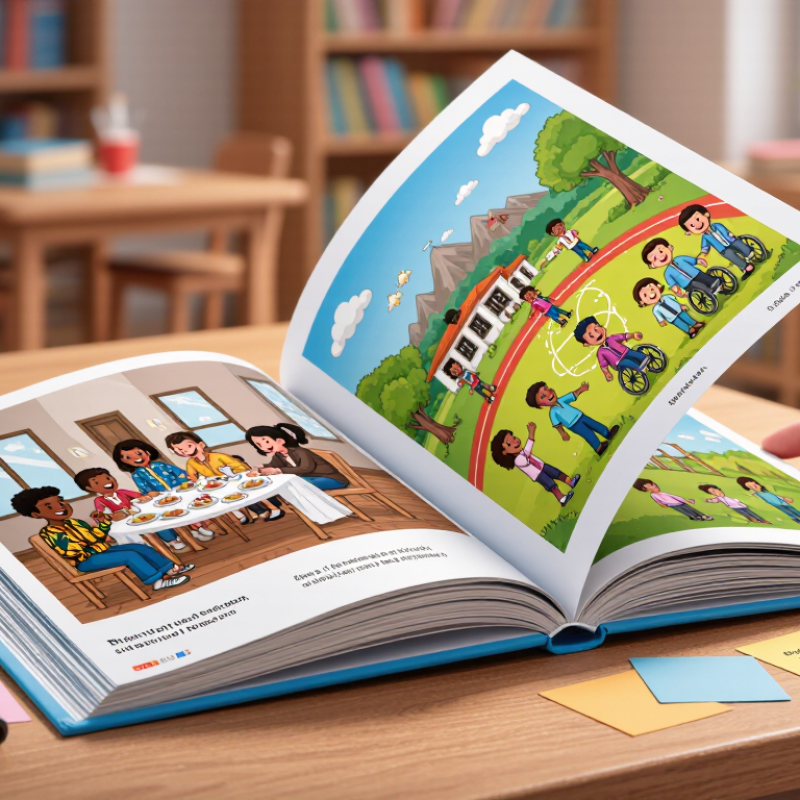
A strong empowerment book lets children recognize themselves without limiting their possibilities. Check who appears on the page, who speaks, and who solves problems. Look for varied skin tones, family structures, abilities, languages, and economic backgrounds. Representation should feel ordinary, not like a special event. A child using a wheelchair can be adventurous, humorous, and imperfect, too.

Cultural relevance requires more than colorful clothing or festival scenes. Examine names, settings, food, school routines, and family relationships. Are they presented with accuracy and respect? Ask local educators, librarians, or cultural reviewers to assess the manuscript. Their lived experience may reveal details a distant editorial team misses. Translation also deserves attention. A literal version can change humor, authority, or emotional meaning.

Inclusivity includes the format itself. Clear layouts, readable type, descriptive illustrations, and accessible digital features support more children. Review the author’s notes and research sources when available. These details do not guarantee perfection, but they show accountability. I would also question books that make every empowering character endlessly confident. That feels polished, yet unrealistic. Children often build courage through hesitation, mistakes, and small choices. Invite feedback from families in the intended market. One review cannot represent an entire culture. Keep learning, revising, and checking whose voice remains absent.

Compare Educational Value, Safety, and Production Quality

How to Choose Kids Empowerment Books for Global Buyers

Educational value should be visible in both the story and the child’s response. Choose books that build confidence without presenting success as effortless. Strong titles show children solving problems, asking questions, and learning from mistakes. Check whether the language suits the intended age, reading level, and cultural setting. Illustrations should include varied families, abilities, and everyday environments without relying on stereotypes. Ask educators or librarians to review sample pages. Their practical feedback often reveals confusing vocabulary or shallow messages.

Safety requires more than suitable themes. Review the handling of fear, conflict, and sensitive subjects with child-development specialists when possible. Avoid content that could distress young readers without meaningful support. For physical books, request documentation for paper, inks, coatings, adhesives, and printing processes. Materials should meet applicable child-product and import requirements in each target market. I have learned that translated text needs review by native speakers, not only automated tools. A small wording error can change a lesson’s meaning.

Production quality affects trust during repeated classroom use. Inspect paper thickness, color consistency, binding strength, page alignment, and corner finishing. Open and close the sample several times. Drop it gently onto a table. Weak binding often appears before shipment. Ask for pre-production proofs and batch inspection records. A bright cover may hide thin pages or uneven printing. I once underestimated packaging quality; moisture damage made an otherwise strong book unsellable. Buyers should compare total landed cost, not only the unit price. Supplier evidence should be clear, current, and independently checkable.

Review Market Fit, Translation Needs, and Global Distribution Potential

Choosing kids’ empowerment books for global buyers requires more than uplifting language. Review age groups, school habits, family values, and buying seasons in each target market. A story about speaking up may fit one culture, yet feel too direct elsewhere. Ask local educators and parents to review sample pages. Their feedback can reveal awkward humor, missing context, or unsuitable images. Small details matter. A classroom poster or family setting may change perceived relevance.

Translation needs should be tested before acquisition. Use children’s translators who understand rhythm, reading levels, and cultural sensitivity. Literal wording can flatten a joke or make a brave character sound rude. Request a sample translation, back-translation, and child-reader feedback. Check names, measurements, idioms, and illustrations together. Some phrases need adaptation, not replacement. I once trusted a polished sample too quickly. Later, uneven chapter quality became obvious. That mistake still shapes my review process.

Global distribution potential depends on format, pricing, file readiness, and reliable partners. Confirm print specifications, ebook accessibility, metadata, and territory rights early. A bilingual edition may support migrant families, but it also raises editing and production costs. Test demand through small orders, educator bundles, or library pilots. Track returns and reader questions, not only sales. Shipping costs may double. Local storage may be unavailable. A practical fallback plan should be checked before large production begins.

How to Choose Kids Empowerment Books for Global Buyers - Review Market Fit, Translation Needs, and Global Distribution Potential

Priority Market Primary Reading Language Market-Fit Signals Translation and Localization Needs Preferred Product Characteristics Distribution Potential Recommended Priority
United States and Canada English; French is important for Canadian distribution Strong demand for inclusive education, social-emotional learning, confidence building, and independent reading Use culturally neutral examples; prepare French localization for Canada; review spelling, school terminology, and regional idioms Ages 4–8 and 8–12, strong visual storytelling, read-aloud suitability, discussion prompts, and durable formats High potential through public libraries, schools, independent bookstores, educational distributors, and online retail channels Very High
United Kingdom, Ireland, Australia, and New Zealand English Established school and library purchasing systems; strong fit for books about resilience, identity, equality, and emotional literacy Adapt spelling, vocabulary, measurements, classroom references, and legal or safeguarding language by country Clear narrative arc, expressive illustrations, inclusive characters, and teacher or caregiver activity pages High potential through library networks, school suppliers, educational fairs, bookstores, and digital discovery channels Very High
Germany, Austria, and Switzerland German Good fit for structured learning, personal responsibility, anti-bullying themes, and practical emotional-development content Professional German translation is essential; check formal language, compound nouns, gender-inclusive wording, and country-specific education terms High-quality paper, precise text-image coordination, educational back matter, and age-specific reading levels Medium-to-high potential through bookstores, libraries, schools, educational wholesalers, and specialist children’s retailers High
France, Belgium, and French-speaking Switzerland French Strong potential for illustrated books addressing creativity, self-expression, equality, and children’s rights Use native French editing; localize tone, punctuation, sentence length, educational vocabulary, and references to family structures Artistic illustration, balanced text density, high-quality design, and themes that support conversation between children and adults High potential through schools, libraries, cultural institutions, bookstores, and educational events High
Spain and Latin America Spanish Broad language reach; strong relevance for confidence, cooperation, migration experiences, gender equality, and community belonging Decide between international Spanish and regional editions; review vocabulary, punctuation, school terms, and cultural references Affordable formats, strong visual appeal, read-aloud text, flexible classroom use, and low cultural dependence in the story High reach but varied purchasing power; combine local distributors, schools, libraries, fairs, and digital editions High
Brazil and Portuguese-speaking markets Portuguese Relevant themes include self-esteem, literacy support, respectful relationships, social inclusion, and community participation Prioritize Brazilian Portuguese when Brazil is the main market; review regional vocabulary, dialogue style, and educational terminology Cost-conscious production, appealing illustrations, short chapters, and supplementary activities for schools or families Medium-to-high potential through schools, public programs, bookstores, educational distributors, and e-commerce Medium-High
Japan and South Korea Japanese and Korean Potential for carefully designed stories about friendship, perseverance, emotional awareness, and respectful independence Use native translators and editors; adapt honorifics, school settings, page layout, reading direction, and culturally specific social cues Polished artwork, concise text, clear emotional progression, premium presentation, and strong read-aloud rhythm Medium potential; specialist publishers, bookstores, libraries, schools, and digital reading services require local partners Medium-High
India and multilingual South Asia English plus regional languages such as Hindi, Bengali, Tamil, Telugu, and Marathi Strong need for accessible books supporting confidence, girls’ education, problem-solving, inclusion, and multilingual literacy Plan for multiple language editions; simplify syntax, test translations with local educators, and avoid culturally narrow assumptions Low-cost editions, durable paper, strong illustrations, classroom activities, and formats suitable for shared reading High long-term reach but complex logistics; use schools, libraries, literacy programs, local distributors, and mobile-friendly formats Medium-High
Middle East and North Africa Arabic; English and French may also be relevant by market Potential for books about self-worth, kindness, family relationships, learning confidence, and responsible citizenship Use native Arabic editing; consider right-to-left layout, Arabic typography, dialect-neutral wording, religious sensitivity, and local family contexts Clear moral perspective without being preachy, family-friendly storytelling, culturally respectful artwork, and strong paper quality Medium potential; local publishing partners, schools, libraries, book fairs, educational suppliers, and regional online channels are important Medium-High

Buyer Evaluation Framework

Priority levels are editorial assessments based on language reach, children’s publishing infrastructure, translation complexity, education use cases, production requirements, and cross-border distribution practicality.

Before acquisition, buyers should validate age suitability, reading level, illustration accessibility, cultural representation, child-safety content, translation quality, intellectual-property clearance, print specifications, and the availability of local distribution partners.

FAQS

How should buyers assess a book’s age suitability?

Compare the stated age range with reading level and emotional development. A six-year-old may read difficult words but struggle with grief or bullying. Read two pages aloud.

Which reading features support developing readers?

Look for short sentences, familiar settings, clear dialogue, and manageable chapters. Check vocabulary, visual support, and confusing pronouns. The layout should not feel crowded.

How can buyers test real understanding?

Ask whether the child can explain a character’s choice. Pronouncing every word is not enough. Watch for silent confusion.

What content deserves careful review?

Check frightening scenes, abstract ideas, unfair power dynamics, and emotional intensity. A confident hero should not depend on stereotypes or unrealistic success.

How can a book represent children inclusively?

Look for varied skin tones, abilities, languages, family structures, and economic backgrounds. A wheelchair user can be adventurous, funny, and imperfect. Representation should feel ordinary.

What makes cultural representation respectful?

Examine names, food, clothing, schools, family routines, and community settings. Colorful festival scenes alone prove little. Ask local educators or cultural reviewers for feedback.

Why does translation require special attention?

Literal translation can change humor, authority, or emotional meaning. Review sample pages in the target language. A familiar phrase may sound distant elsewhere.

What accessible features should buyers check?

Review readable type, clear layouts, descriptive illustrations, and useful digital features. These details support more children. Some choices may still need revision.

How can buyers avoid overly perfect empowerment stories?

Look for characters who hesitate, make mistakes, and choose small acts of courage. Endless confidence feels polished but unrealistic. Keep checking whose voice remains absent.

Conclusion

Choosing the right Kids Empowerment Books for global buyers begins with defining the book’s purpose, such as building confidence, encouraging independence, developing empathy, or helping children understand their abilities and responsibilities. Buyers should assess whether the language, reading level, themes, and emotional content are suitable for the intended age group. A strong title should also present diverse characters, respectful cultural perspectives, and inclusive experiences without relying on stereotypes or confusing messages.

Educational value should be balanced with child safety, clear storytelling, durable materials, and reliable production quality. Global buyers should consider whether the book fits local market interests, educational expectations, and family values. Translation requirements, adaptable wording, cultural sensitivity, and distribution practicality are also important when planning international sales. By reviewing these factors together, buyers can select Kids Empowerment Books that are meaningful, accessible, safe, and appealing to children and families in different regions.

Ethan

Ethan

Ethan is a dedicated marketing professional with a deep understanding of the company’s products, services, and customers. With a strong background in market research, content strategy, and digital communication, he transforms complex product information into clear, practical, and engaging insights.......