Funny Canvas Tote Bags can turn an everyday carryall into a small, useful brand impression. The opportunity is real, but a witty graphic alone cannot guarantee attention. PPAI’s 2023 annual sales report estimated the U.S. promotional products industry at $25.5 billion, reflecting strong competition for customers’ notice. ASI’s 2023 Global Ad Impressions Study reported that promotional bags generate an average of 1,940 impressions over their lifetime. These figures offer context, not a promise for any single tote or campaign.
Choosing well starts with the person carrying it. Consider whether your audience prefers dry wordplay, playful illustrations, or a design that feels subtle enough for a grocery run. Check fabric weight, handle length, stitching, print clarity, and usable capacity; a charming slogan matters less if a loaded bag feels flimsy. Ask suppliers for material specifications and a physical sample, then inspect the seams and artwork in daylight. Small details show.
The message should be readable from a few steps away, yet still feel like your brand. Test the joke with people outside your design team; humor can land differently than expected. That is worth admitting. A tote may earn repeat use, or it may end up folded in a drawer. This guide explores how to balance humor, durability, audience fit, and production choices when selecting Funny Canvas Tote Bags for your brand.
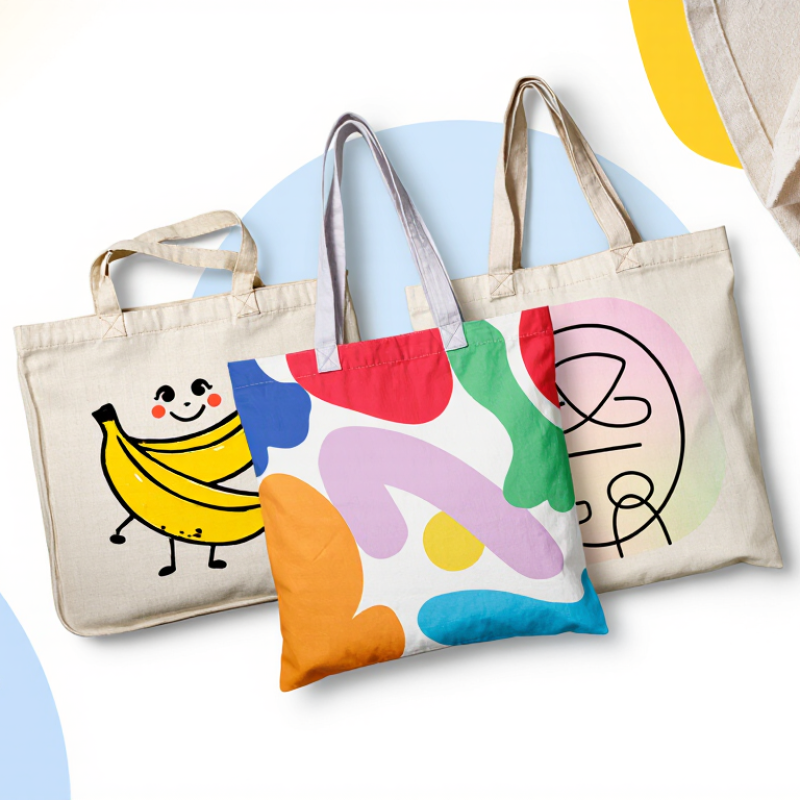
Before choosing a joke, picture who will carry the bag. A tote for university students might feature dry humor, bold lettering, and space for a laptop. Shoppers at a weekend market may prefer a quieter pun beside a small illustrated tomato. Age can offer clues, but habits matter more. Ask where people use bags, what they carry, and which jokes they share.
Your brand personality should shape the humor. A playful, informal business might use a silly phrase in large type. A thoughtful, design-focused business could choose a subtle line drawing and a joke people notice up close. Keep the wording easy to read from a few feet away. Check that the message still feels right beside your usual colors, photography, and tone of voice. Funny is subjective. A joke that feels charming to one group may seem confusing to another.
Test a few concepts with real customers before ordering a large run. Show them printed-size mockups, not just designs on a bright screen. Ask what they understand first, and whether they would carry the bag in public. Their answers may surprise you. Even a popular joke can look crowded when printed on textured canvas. Check letter spacing, contrast, and how the design sits when the tote is folded. I’d avoid pretending every idea will land; sometimes the simplest line works better, and sometimes it needs another draft.
A funny tote should sound like your brand on its best day, not a stranger borrowing its voice. A playful café might use dry observations about morning routines; a children’s bookstore could choose gentle wordplay. Match the joke to the people carrying the bag and the places they’ll use it. Keep it kind. A sharp joke can feel clever in a meeting and awkward on a crowded train.
Choose a humor style before writing slogans. Try observational humor for everyday moments, puns for light, quick laughs, or gentle absurdity for a more imaginative feel. Nielsen’s 2021 Trust in Advertising report found that 88% of respondents trusted recommendations from people they knew. That is not a humor study, but it’s a useful reminder: make the message feel natural enough to share, rather than engineered for attention. A joke that needs a long explanation probably won’t travel far.
Test the line on a real tote mockup. Picture it printed in dark ink on natural canvas, partly hidden beneath a jacket, or read from across a shop. Is it still clear? Does it make sense without a social-media caption? HubSpot’s 2024 State of Marketing report identified short-form video as a leading ROI format for marketers; a brief mockup video can help compare reactions before printing. Track which line people remember, not only which one gets a quick laugh. And sometimes, the pun misses. That’s useful feedback, not a reason to force it.
| Humor Style | Typical Characteristics | Sample Tote Bag Message | Best Fit | Consider Before Choosing |
|---|---|---|---|---|
| Lighthearted and cheerful | Friendly wordplay, upbeat phrases, and simple visual jokes. | “Good things are in the bag.” | Everyday retail, community events, and broad-audience promotions. | Keep the joke easy to understand at a glance. |
| Dry and understated | Deadpan wording and restrained graphics; the humor comes from the contrast. | “This bag contains bag things.” | Minimal designs and audiences who enjoy subtle humor. | Avoid overly obscure references that may not land with casual viewers. |
| Puns and wordplay | Familiar phrases adapted around shopping, carrying, food, books, or daily routines. | “Tote-ally prepared.” | Gift shops, markets, and designs tied to a clear product or activity theme. | Check that the wording reads naturally and remains legible on the bag. |
| Relatable everyday humor | Playful observations about errands, busy schedules, or carrying too much. | “Out for one thing. Carrying twelve.” | Lifestyle products, local events, and practical everyday accessories. | Choose situations your intended audience can recognize without making assumptions about them. |
| Whimsical and imaginative | Surreal ideas, playful characters, or unexpected combinations of words and images. | “Emergency snacks: probably inside.” | Creative events, art-focused products, and audiences who enjoy expressive illustrations. | Make sure the illustration and text work together rather than compete for attention. |
| Self-deprecating | Gentle jokes about forgetfulness, indecision, or everyday disorganization. | “I brought a list. I forgot the list.” | Casual, conversational settings where a personal, informal tone feels appropriate. | Keep the joke warm and inclusive; avoid humor that sounds harsh or insulting. |
| Topical or niche humor | References to a specific hobby, profession, community, or current cultural moment. | “One more chapter, then I’ll go.” | Special-interest events and clearly defined audience groups. | Check that the reference is understandable, appropriate, and still relevant when the bags are distributed. |
Selection tip: Match the humor’s tone to your audience and intended setting. Use original, readable copy, and review jokes for clarity, inclusivity, and cultural sensitivity before printing.
Choosing a funny canvas tote starts with the items people will actually carry. A compact 12-by-14-inch bag suits books, snacks, or a few market finds. For groceries or a folded sweater, a wider 15-by-16-inch shape offers more room. Measurements vary by maker, so check the finished bag rather than relying on a size label. A joke printed near the base may disappear when the tote is full. Keep the punchline visible above the usual load line.
Canvas weight affects both feel and print performance.
Midweight cotton canvas is flexible and easy to fold, while heavier canvas holds its shape better under books or produce. Ask for the fabric weight and a sample when ordering in bulk; “canvas” alone does not tell you enough.
Test the artwork on the actual fabric, too. Ink can look different against natural, slightly textured cotton. A little unevenness is possible.
Handle design changes how comfortable the bag feels. Short handles work for carrying by hand, but longer straps sit more easily over a shoulder, especially with a coat. Check the handle drop with a real person and a loaded sample, not just a product sketch. Reinforced stitching at the handle ends can help with regular use.
Small details matter. There is no perfect size for every customer, and I would not pretend otherwise. Choose based on the setting, then review the sample before approving production.
Funny artwork only works when people can understand the joke at a glance. Check that the main image stays clear at the tote’s actual print size, not just on a bright screen. Tiny expressions, thin outlines, and crowded details can disappear against woven canvas. Strong contrast helps, but a very large block of dark ink may feel stiff on a light bag. Keep a little breathing room around the design. It matters.
Readability deserves its own test. View the artwork from a few steps away, as someone might see it on a busy sidewalk. Use lettering with open shapes and enough weight; narrow fonts can close up when printed. A short phrase often lands better than a clever paragraph. Print a paper mock-up at full size and ask someone unfamiliar with the design what they read first. If they guess wrong, revise the layout rather than explaining the joke.
Printing quality can change the mood of the artwork. Ask for a physical sample on similar canvas, since screen colors rarely show the final result exactly. Inspect small lines, color edges, and how the fabric feels beneath the ink. A wash test can reveal fading or cracking, though results depend on the ink, fabric, and care instructions. I’d still avoid promising perfect color matching; that expectation is easy to get wrong.
When comparing suppliers for funny canvas tote bags, request itemized quotes rather than one total price. Check the bag’s fabric weight, print method, minimum order, setup charges, and delivery cost. A low unit price can hide expensive artwork revisions or shipping. Ask how the supplier handles color changes between batches. Small details matter.
Order samples from two or three suppliers before choosing. Inspect the seams, handle length, and fabric feel with a loaded bag. Then check the joke artwork in natural light: thin lettering may disappear against rough canvas, while bright colors can look duller than expected. Ask for a printed sample, not only a digital mock-up. That difference matters.
Compare samples side by side. Photograph them under the same lighting, and note which design stays readable from a few steps away. Test a folded bag, too; a crease across the punchline is not ideal. Supplier replies can reveal useful differences: clear answers about ink, proofing, and replacement terms suggest a steadier process. Still, one sample cannot predict every production run, and choosing only by price is tempting when budgets are tight. I would leave room in the budget for a revised proof, especially when the humor depends on small text.
Match the joke to your audience and setting. A café might use dry observations, while a children’s shop could use gentle wordplay. Keep it kind. A joke that needs explaining may not travel well.
Print it on a tote mockup and check it in dark ink on natural canvas. See whether it stays readable from a few steps away or beneath a jacket. Track which line people remember, not only which one gets a laugh. Sometimes the pun misses.
A 12-by-14-inch tote can hold books, snacks, or a few market finds. A wider 15-by-16-inch shape offers more room for groceries or a folded sweater. Measurements vary, so check the finished bag. Keep the punchline above the usual load line.
Yes. Midweight cotton folds easily, while heavier canvas holds its shape better with books or produce. Ask for the fabric weight and a sample. “Canvas” alone tells you little.
Short handles work well for carrying by hand. Longer straps sit more comfortably over a shoulder, especially over a coat. Test the handle drop with a real person and a loaded sample. Small details matter.
Request itemized costs for fabric weight, print method, minimum order, setup, and delivery. Ask how color changes and artwork revisions are handled. A low unit price can hide extra charges.
A digital preview cannot show exactly how ink looks on textured cotton. Check lettering, seams, handles, and fabric feel under natural light. A little unevenness is possible.
Photograph samples under the same lighting and compare readability from a few steps away. Fold each bag to see whether a crease crosses the punchline. Leave room in the budget for a revised proof; small text can be fussy.
Choosing Funny Canvas Tote Bags for your brand starts with understanding who will use them and what your brand’s personality feels like. Consider whether your audience prefers clever wordplay, lighthearted illustrations, or subtle humor, and choose a style that feels natural rather than forced. The joke should be easy to understand and appropriate for the people receiving the bag.
Next, match the tote’s size, fabric, and handle design to how it will be used. Review the artwork for clear lettering, readable contrast, and a layout that works on the available print area. Ask suppliers about printing methods, production costs, and delivery details, then compare samples to check the material, stitching, colors, and print quality in person. A thoughtful balance of humor, practical design, and dependable production can help create a tote that people enjoy carrying and remember.