
Designed, written & printed in the USA · Trusted by 4,000+ independent retailers worldwide
0%

Boxed Notecard Sets are coordinated collections of folded or flat cards, envelopes, and sometimes matching keepsake packaging. They offer a ready-to-use option for thank-you notes, invitations, and everyday correspondence. A typical set might include twenty cream cards, twenty envelopes, and a fitted paperboard box. The details matter: card size, paper weight, finish, and envelope fit all affect how the set feels and works.

Stationery product designer Lena Hart describes their appeal this way: “A good notecard set makes the thoughtful gesture easier, without making it feel less personal.” The box keeps cards together and can make storage simpler. It also shapes the first impression, especially when the set is given as a gift. Small, but useful.

This guide explains what Boxed Notecard Sets include, how common styles differ, and which details are worth checking before purchase. Look closely at the quantity, dimensions, paper surface, and whether envelopes are included. A smooth card may suit crisp writing, while a lightly textured stock can feel warmer in the hand. Neither is automatically better. Print colors may also look different across screens and paper, so expectations deserve a little caution. Packaging can be attractive yet bulky, and a set may not fit every occasion. That is part of choosing well: match the materials and design to how you actually plan to write, send, or store the cards.
What Are Boxed Notecard Sets?

Definition and Purpose of Boxed Notecard Sets

What Are Boxed Notecard Sets?

Definition and Purpose of Boxed Notecard Sets

Boxed notecard sets are coordinated collections of small writing cards, envelopes, and a storage box. They are designed for brief, personal messages rather than long letters. Cards may share a color, illustration, or paper style, giving the set a consistent look. The box keeps everything together in a desk drawer or on a shelf. Simple, but useful.

Their main purpose is to make handwritten notes easier to send. A notecard can suit a thank-you message, a quick congratulations, or a few thoughtful lines after a visit. The matching envelopes and ready-to-use format save time when a suitable card is needed. Sets vary in card size, paper thickness, finish, and quantity, so checking these details can prevent surprises. Some paper feels smooth; other stock has a texture that may affect certain pens. That small detail is easy to overlook.

Tips

Check whether envelopes are included and whether the cards are blank or printed inside. Try your preferred pen on a similar paper surface, if possible. Keep the box somewhere dry and easy to reach; otherwise, the cards may stay unused for months. A little planning helps, though even an imperfect note can feel more personal than silence.

Common Components and Packaging

What Are Boxed Notecard Sets?

Common Components and Packaging

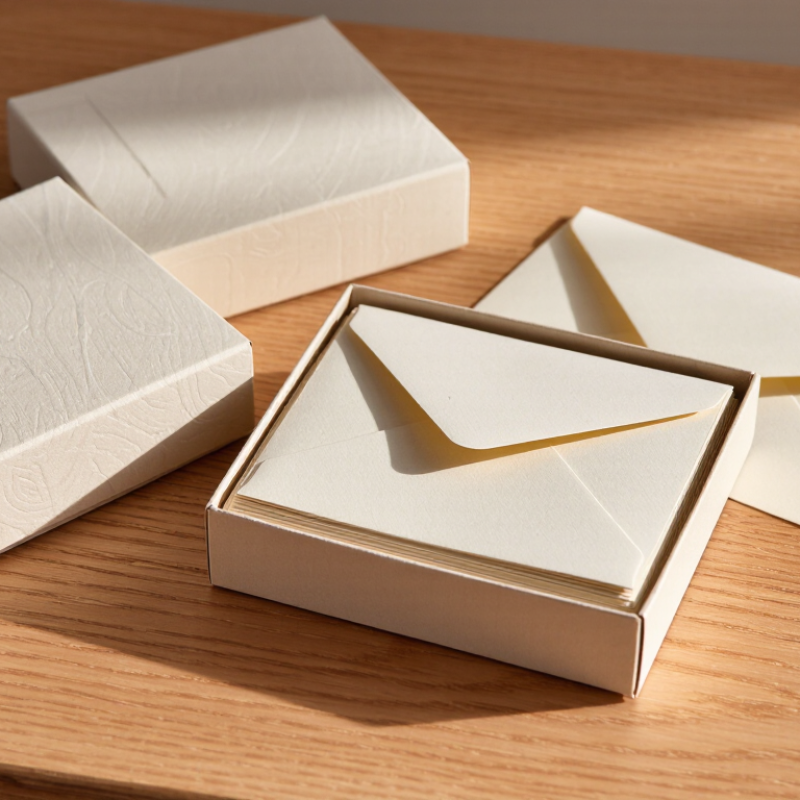
Boxed notecard sets are coordinated collections designed for short handwritten messages. They usually include blank cards, matching envelopes, and a fitted storage box. Card sizes often range from small correspondence formats to generous folded notes. Some cards remain flat, while others fold cleanly along a scored center line.

Paper quality shapes the writing experience. Smooth stock suits fine pens and produces crisp lines. Slightly textured stock gives a softer, handmade appearance. A practical set should prevent heavy ink from showing through the card. I once assumed thicker paper always meant better quality. It does not. Poor coating or uneven fibers can still make writing frustrating. A useful set balances weight, texture, and everyday comfort.

Packaging protects the cards and helps the set sit neatly on a desk. Common structures include a rigid paperboard box, lift-off lid, sliding drawer, or removable sleeve. Interior trays may separate cards from envelopes and prevent bent corners. Some boxes use a paper band, printed label, or small ribbon pull for easier opening. These details seem minor, but they affect storage and repeated use. Reliable packaging should close securely without crushing the contents. It should also identify materials clearly, especially when recycling rules vary by location. Excessive wrapping can look polished, yet it may create unnecessary waste. That trade-off deserves closer attention.

What Are Boxed Notecard Sets? - Common Components and Packaging

Component Common Format or Material Typical Purpose Packaging Considerations
Notecards Folded or flat cards, commonly made from uncoated paper or cardstock Provide a surface for handwritten messages, short notes, or greetings Cards are usually stacked evenly, with folded cards aligned in the same direction.
Envelopes Paper envelopes sized to fit the cards; may be plain or have a coordinating interior Protect and carry individual cards for mailing or gifting Often packed beneath or alongside the cards. Envelope quantity may match the card count.
Printed Design Illustrations, patterns, borders, or short printed messages Give the set a visual theme while leaving room for a personal note Designs may appear on the front, inside, or envelope lining; the writing area varies by layout.
Cardstock Thicker paper stock than standard writing paper; weight and finish vary Add structure and provide a suitable surface for writing A firm card may help reduce bending during storage and handling.
Box or Sleeve Paperboard box, hinged-lid box, or paper sleeve Keep the cards and envelopes together and make the set easy to store Boxes may include a tuck closure or fitted lid. Sleeves use less material but offer less protection.
Insert or Divider Paperboard card, paper insert, or simple divider Separate contents, provide product details, or help keep the stack in place May sit above or below the cards; not every set includes one.
Protective Wrap Paper band, clear film, or a paper-based wrap Hold the package closed and help protect it from dust or scuffing The outer wrap is optional and varies with the packaging format and retail requirements.
Quantity and Size Information Printed label or information panel on the box or sleeve Identify the number of cards and envelopes and indicate card dimensions Counts and measurements differ by set; check the package for exact specifications.

Card Formats, Materials, and Design Features

Boxed notecard sets usually pair several cards with matching envelopes in a rigid, lift-off-lid box. Cards may be flat or folded. Flat cards suit brief notes and signatures, while folded formats provide room for a longer message. Common sizes range from compact cards that fit neatly in a desk drawer to larger formats with more writing space. Check the envelope dimensions, too; a card that slides in easily is less likely to catch or bend at the corners.

Paper changes how a set feels and performs. Smooth, uncoated stock supports crisp handwriting, while lightly textured paper adds a tactile surface but may slow a fine-tip pen. Heavier cardstock feels substantial, though very thick cards can make the box harder to close when envelopes are included. Small details matter. Look for clean cuts, even folds, and a box insert that keeps cards from shifting during storage.

Design features can be decorative or practical. A blank interior offers flexibility; a printed greeting sets a specific tone. Simple borders, subtle color, or a small illustration leave room for a personal message. Foil and raised details can add contrast, but too much decoration may compete with handwritten text. One imperfect point is easy to overlook: attractive packaging cannot make cramped writing space comfortable. Before choosing a set, consider the pen you use and how much you tend to write.

Typical Uses in Personal and Professional Settings

Boxed notecard sets usually contain coordinated cards and envelopes, often stored in a small rigid box. Their compact format makes them easy to keep near a desk or pack for travel. In personal settings, people use them for thank-you notes, birthday messages, invitations, and brief words of sympathy. A handwritten card can feel more considered than a quick message, especially when it names a specific gift or shared memory. Keep a pen nearby. It helps.

For work, notecards can support client follow-ups, event invitations, interview thank-yous, and short appreciation messages to colleagues. A card sent after a meeting may reinforce a useful connection, but it works best when the message is specific and sincere. For example, mention a detail from the conversation rather than relying on a generic line. Choose a restrained design for formal settings, and check that the envelope fits the card before writing. Small practical details matter.

Not every note needs to sound polished. A slightly uneven line of handwriting may feel more human than a printed message, though rushed writing can be hard to read. Keep the message brief, use the recipient’s name, and make sure dates or contact details are accurate. The box itself also deserves a quick check: card counts and sizes vary, so confirm what is included before choosing a set for an occasion.

Factors to Consider When Choosing a Set

When choosing a boxed notecard set, think about how you will use it. A set for quick thank-you notes may need more cards than one reserved for occasional personal letters. Check the card count, envelope count, and whether the envelopes fit each card neatly. Paper weight matters, too. Heavier stock feels sturdy and usually handles ink better, while very textured paper can make fine handwriting less clear. Try your usual pen on a sample, if possible.

Consider size, design, and storage. A compact box fits easily in a desk drawer, but smaller cards leave less room for a thoughtful message. Look for a design that suits several occasions, unless you prefer cards for one specific purpose. Check that the box closes securely and keeps cards flat. Small details make a difference. Still, packaging can look lovely while the paper disappoints, so inspect the actual materials rather than relying on appearance alone.

Tips: Count the envelopes before buying, especially if you plan to send every card. If you write with fountain or gel pens, test for smudging and show-through. Choose a layout with enough blank space for your handwriting. And be honest about your habits: a large set is not always better if it will sit unopened for years.

FAQS

What are boxed notecard sets?

They are coordinated collections of small writing cards, envelopes, and a storage box. They support brief handwritten messages. Simple, but useful. Cards may share colors, illustrations, or paper textures.

What usually comes inside a boxed notecard set?

Most sets include blank cards, matching envelopes, and a fitted box. Some cards fold along a scored center line. Others stay flat for shorter messages. Check the quantity before buying.

What are boxed notecard sets commonly used for?

People use them for thank-you notes, congratulations, invitations, and sympathy messages. They also suit birthday wishes and short personal updates. A specific memory makes the note feel more thoughtful.

Can notecard sets be used in professional settings?

Yes, they can support follow-ups, invitations, and appreciation messages. A note after a meeting may strengthen a useful connection. Mention one detail from the conversation. Generic wording feels weaker.

How does paper texture affect writing?

Smooth paper works well with fine pens and creates crisp lines. Textured paper gives handwriting a softer, handmade appearance. Heavy ink may show through thinner cards. Thicker paper is not always better.

Should I check the envelopes before using the cards?

Yes, confirm that envelopes are included and match the card size. Some sets have blank envelopes, while others include printed details. Test the fit before writing. A poor fit can bend corners.

How should boxed notecard sets be stored?

Keep the box in a dry, reachable place, such as a desk drawer. The box should close securely without crushing the cards. Interior trays can protect envelopes and corners. An unused set is not very helpful.

What details should I check before choosing a set?

Check the card count, dimensions, paper finish, and envelope quantity. Confirm whether the cards are blank or printed inside. Choose restrained designs for formal messages. I sometimes overlook these details, and that causes avoidable surprises.

Conclusion

Boxed Notecard Sets are coordinated collections of small writing cards and envelopes packaged together for convenient correspondence, organization, and presentation. They commonly include a stack of notecards, matching envelopes, and a sturdy box or sleeve that keeps the materials protected and neatly arranged. Depending on the set, the cards may be folded or flat, made from lightweight or premium paper, and decorated with simple patterns, borders, illustrations, or space for personalization.

Boxed Notecard Sets are useful for thank-you messages, invitations, reminders, professional follow-ups, and everyday notes. When choosing a set, consider the card size, paper quality, writing space, envelope fit, design style, quantity, and overall packaging. A practical choice should match the intended setting while offering enough durability and comfort for writing. Sets with versatile designs can serve both personal and professional purposes, whereas more distinctive styles may be better suited to special occasions or thoughtful gifts.

Ethan

Ethan

Ethan is a dedicated marketing professional with a deep understanding of the company’s products, services, and customers. With a strong background in market research, content strategy, and digital communication, he transforms complex product information into clear, practical, and engaging insights.......