
Designed, written & printed in the USA · Trusted by 4,000+ independent retailers worldwide
0%

Choosing the right Stainless Steel Pint Cups in 2026 requires more than comparing prices and polished product photos. Global buyers need dependable information about steel grade, capacity, insulation, coating quality, and production consistency. A cup may look attractive online yet feel unbalanced in the hand. That small detail matters during busy events, outdoor service, and repeated commercial use.

This guide examines practical options for distributors, retailers, hospitality suppliers, and promotional-product buyers. It considers common materials such as 304 stainless steel, while noting when 316 steel may suit more demanding environments. Product samples should be checked for odor, sharp edges, lid fit, condensation control, and surface defects. Documentation also matters, including food-contact declarations, factory quality records, packaging details, and test reports accepted in the destination market.

No product is perfect. Some supplier claims still require verification. Even attractive volume pricing can hide inconsistent wall thickness or weak printing durability. Buyers should request samples before placing large orders and confirm dimensions, carton weight, lead time, and replacement policies in writing. A reliable supplier should answer clearly and provide traceable specifications.

This overview focuses on realistic purchasing decisions rather than exaggerated promises. It compares practical performance, customization flexibility, shipping considerations, and long-term value. The goal is simple: help global buyers select cups that perform consistently, arrive safely, and match their customers’ expectations. Small checks prevent expensive mistakes.
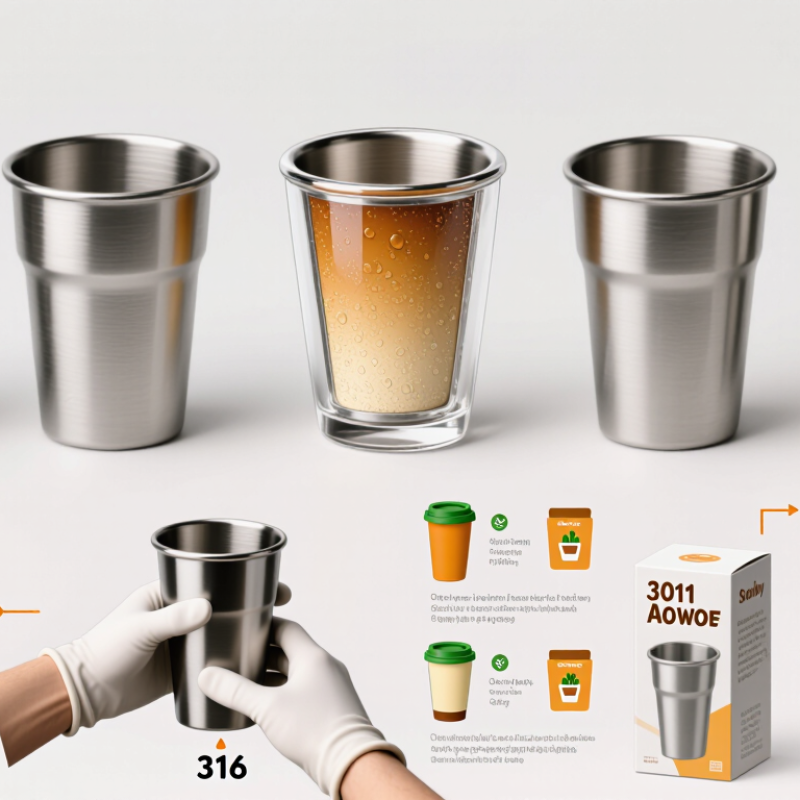
2026 Best Stainless Steel Pint Cups for Global Buyers?

What Are Stainless Steel Pint Cups and How Are They Used?

Stainless steel pint cups are reusable drinking vessels, usually holding 16 US fluid ounces, or 20 imperial fluid ounces. That difference matters for global buyers. A cup marked “pint” should show its exact capacity in millilitres. Most models use food-contact stainless steel, commonly 18/8 or 18/10 grades, with a smooth interior and rolled rim. They are used for beer, cider, soft drinks, water, and event service.

The material offers practical strengths. It resists rust, absorbs no beverage flavour, and tolerates repeated washing better than many disposable options. The International Stainless Steel Forum reported 58.4 million tonnes of global crude stainless steel production in 2023. That scale supports broad supply, but it does not guarantee equal quality.

Buyers should request steel-grade certificates, wall-thickness details, weld inspection, and migration-test documentation. A thin cup may dent beside a crowded bar counter.

Usage conditions shape the design. Single-wall cups feel cold quickly and may collect condensation. Double-wall versions improve hand comfort but can cost more and complicate recycling.

The United Nations Environment Programme notes that reusable products deliver better environmental results only when used repeatedly and cleaned efficiently. That point is easy to overlook. A cup washed after every sip is not automatically a sustainable choice. In real purchasing work, stackability, dishwasher compatibility, carton strength, and readable volume markings often matter more than polished appearance. Some specifications still need questioning.

Key Materials, Designs, Sizes, and Performance Features

2026 Best Stainless Steel Pint Cups for Global Buyers?

Material choice affects safety, durability, and long-term value. Food-grade 304 stainless steel, often called 18/8, suits most beverages and daily service. Its chromium content supports corrosion resistance, while nickel improves surface stability. For salty or coastal environments, 316 steel offers stronger resistance, although it usually costs more. The International Stainless Steel Forum reported global stainless steel production of about 58.4 million tonnes in 2023, showing the material’s broad industrial availability. Still, “stainless” does not mean stain-proof. Poor cleaning can leave tea marks, odors, or microscopic residue.

Design should match the drinking occasion. A straight 16-ounce pint fits standard cup holders and feels balanced in the hand. Twelve-ounce versions suit controlled portions, while 20-ounce cups help outdoor users reduce refills. Double-wall vacuum construction can keep drinks cooler for longer, but performance depends on lid sealing, wall thickness, and ambient temperature. The reusable bottle market was valued at billions of dollars in recent market reports, including Grand View Research’s 2023 assessment, yet market growth does not guarantee better construction. Check heat-retention claims against recognized testing methods, not promotional language.

Look for rolled rims, stable bases, smooth welds, and removable silicone seals. Powder coating improves grip, but scratches may expose the surface beneath. Dishwasher compatibility matters for commercial buyers, though repeated high-heat cycles can weaken seals. I would avoid oversized claims. A lighter cup may feel convenient, but it can dent more easily. That trade-off is real. For global procurement, request material certificates, capacity tolerances, coating details, and independent food-contact documentation before approving a shipment.

How to Compare the Best Stainless Steel Pint Cups in 2026

When comparing the best stainless steel pint cups in 2026, start with capacity, not appearance. A true US pint holds 16 fluid ounces, or about 473 milliliters. Some export cups use imperial measurements, creating a noticeable difference. Check the marked fill line and measured capacity with water.

Material quality affects daily performance. Food-grade 18/8 or 304 stainless steel is a practical benchmark for regular beverage use. Inspect the rim for smooth finishing, the base for stability, and the welds for clean, even joins. Thin walls may reduce cost but can dent during transport. Double-wall construction keeps hands cooler and drinks warmer, although it usually increases weight and price. Avoid vague claims such as “premium steel” without a material specification or test document.

Real-world testing should include stacking, washing, condensation, and repeated drops from table height. I would also compare the cup after twenty dishwasher cycles, because polished surfaces can lose their shine. Small details matter. Is the inside easy to clean? Does the cup slide on a wet counter? For global buyers, review carton dimensions, protective packaging, minimum order quantities, and destination-specific food-contact requirements. A supplier that provides batch records and inspection samples is easier to evaluate. Still, samples can flatter production quality. Request random pre-shipment checks. A perfect sample is not always the whole story.

Safety, Sustainability, Cleaning, and Maintenance Considerations

2026 Best Stainless Steel Pint Cups for Global Buyers?

Safety, Sustainability, Cleaning, and Maintenance Considerations

For global buyers, the best stainless steel pint cup is not simply the brightest or cheapest. Material evidence matters. Ask suppliers for the steel grade, food-contact test reports, and batch traceability. Austenitic stainless steel, such as 304, usually offers strong corrosion resistance for normal beverage use. However, quality depends on forming, weld finishing, and surface treatment. Rough seams can trap residue. Check rim smoothness with a clean fingertip, and inspect the base for sharp edges or unstable rings. Verify destination-market requirements before placing a large order.

Safety also includes the drinking experience. A rolled rim should feel even, without exposed metal or flaking coatings. Avoid cups with decorative layers that scratch easily or lack clear care instructions. For temperature-sensitive drinks, test the wall design before large orders. Single-wall steel can feel hot or cold quickly. Double-wall construction may improve comfort, but it can complicate repair and recycling. That trade-off deserves honest review. No cup is perfect.

Wash promptly with warm water, mild detergent, and a soft brush. Rinse thoroughly, then dry the cup upside down to reduce trapped moisture. Do not leave salty drinks, acidic mixers, or milk residue inside overnight. They may encourage staining or unpleasant odors around seams and seals. Use chlorine cleaners and abrasive pads cautiously; they can damage the passive surface or leave scratches. Dishwasher use should follow tested instructions, not a vague “dishwasher safe” claim. For sustainability, compare service life, replacement parts, packaging volume, and local recycling access. A reusable cup still wastes resources if it dents quickly or requires long-distance replacement. That is an uncomfortable point.

2026 Best Stainless Steel Pint Cups for Global Buyers

Safety, sustainability, cleaning, and maintenance begin with the stainless steel grade. This chart compares representative midpoint compositions for food-contact stainless steel grades commonly used in reusable drinkware.

Safety

Select cups made from food-contact-compliant stainless steel and verify that coatings, welds, and lids are also suitable for beverage use.

Sustainability

Reusable stainless steel can support long service life and is widely recyclable. Product durability, repairability, and end-of-life recycling access should be assessed by market.

Cleaning and Maintenance

Wash promptly with mild detergent, rinse thoroughly, and dry completely. Avoid prolonged exposure to bleach, concentrated chlorides, and abrasive cleaners; inspect for scratches, corrosion, or damaged seals.

Chart values are representative midpoint percentages derived from commonly specified ASTM A240 composition ranges: Grade 304 approximately 18% chromium and 8.5% nickel; Grade 316 approximately 17% chromium, 12% nickel, and 2.5% molybdenum. Iron and other elements are not shown.

Global Buying Factors: Suppliers, Certifications, Costs, and Shipping

For 2026 stainless steel pint cups, global buyers should evaluate suppliers beyond catalogue prices. The International Stainless Steel Forum reported 58.4 million tonnes of crude stainless steel production in 2023, down 5.2% year on year. This fluctuation can affect material surcharges and quotation validity. Ask for the steel grade, mill certificate, wall thickness, capacity tolerance, and surface-finish standard. A cheap 304 cup may still disappoint if welding creates sharp rims or weak seams.

Food-contact documentation deserves equal attention. Request test reports for the finished cup, not only raw-sheet certificates. Depending on the destination, buyers may need evidence aligned with FDA food-contact requirements, EU Regulation 1935/2004, or relevant national rules. ISO 9001 supports process control, but it does not prove food safety. That distinction is often missed. Supplier audits should check leak testing, coating adhesion, dishwasher claims, and packaging cleanliness. Small details matter.

Shipping planning is practical, not administrative. UNCTAD’s Review of Maritime Transport states that over 80% of global merchandise trade by volume moves by sea. Container delays can therefore change launch schedules quickly. Compare FOB, CIF, and delivered costs using the same carton count and port assumptions. Confirm carton dimensions, pallet limits, customs codes, and insurance terms in writing. Freight quotes expire. That is inconvenient. Buyers should also calculate landed cost with a contingency for steel-price movement, port congestion, and inspection delays. I would not rely on one supplier, even after a successful sample order.

FAQS

What is a stainless steel pint cup?

It is a reusable cup made for beverages such as beer, cider, water, or soft drinks. A typical US pint holds 16 fluid ounces. An imperial pint holds 20 fluid ounces. Always confirm the millilitre capacity.

Which stainless steel grade is suitable for beverage cups?

Food-contact grades such as 18/8, 18/10, or 304 are commonly suitable. However, the grade alone does not prove quality. Forming, welding, and surface finishing also matter. Ask for material certificates and batch traceability.

What safety details should buyers inspect?

Check the rolled rim with a clean fingertip. It should feel smooth and even. Inspect the base for sharp edges or wobbling. Rough seams may trap residue. That is easy to miss.

Should buyers choose single-wall or double-wall cups?

Single-wall cups are usually lighter and easier to stack. They can feel cold quickly and collect condensation. Double-wall cups improve hand comfort around cold drinks. They may cost more and complicate recycling. No design solves every problem.

How should stainless steel pint cups be cleaned?

Wash them promptly with warm water and mild detergent. Use a soft brush for the interior and seams. Rinse thoroughly, then dry them upside down. Do not leave salty, acidic, or milky drinks overnight. Avoid harsh chlorine cleaners and abrasive pads.

Are stainless steel pint cups automatically sustainable?

No. Reuse frequency strongly affects environmental performance. A durable cup used repeatedly can reduce disposable waste. A cup washed inefficiently after every brief use may offer fewer benefits. Consider service life, replacement parts, packaging, and local recycling. This point deserves more honesty.

What documents should global buyers request?

Request the steel grade, wall thickness, capacity tolerance, and surface-finish standard. Ask for finished-cup food-contact reports, not only raw-sheet certificates. Review leak testing, weld inspection, coating adhesion, and cleaning instructions. A quality certificate alone may be insufficient.

Which shipping details affect the final purchase cost?

Compare product, carton, freight, insurance, customs, and inspection costs together. Confirm carton dimensions, pallet limits, customs classifications, and delivery terms in writing. Allow extra time for port delays and material-price changes. Freight quotations can expire quickly. I would not depend on one supplier.

Conclusion

Stainless Steel Pint Cups are durable, reusable drinkware designed for serving beer, water, juice, coffee, and other beverages in homes, restaurants, outdoor events, and hospitality settings. This 2026 guide explains how to evaluate their material quality, wall construction, capacity, shape, insulation, finish, stability, and overall performance. Buyers can compare single-wall and double-wall designs, standard pint sizes, stackability, comfort, and resistance to dents, corrosion, and temperature changes.

The guide also highlights food-contact safety, responsible material selection, recyclability, cleaning requirements, and long-term maintenance. For global buyers, important considerations include supplier reliability, production consistency, quality inspections, certifications, customization options, minimum order quantities, total costs, packaging, lead times, and shipping conditions. By reviewing these factors together, purchasers can select Stainless Steel Pint Cups that offer practical value, dependable durability, easier maintenance, and suitability for different markets and usage environments.

Amelia

Amelia

Amelia is a dedicated marketing professional with a deep understanding of the company’s products, customers, and industry landscape. With a strong background in content strategy, market research, and customer communication, she transforms complex product information into clear, practical, and......